Saudi Arabic Numbers & Bargaining Phrases for Shopping Like a Local
Numbers, prices, and the art of haggling — the Saudi Arabic phrases you need to shop confidently in any souq, baqala, or mall. Every phrase in Arabic script, transliteration, and English.

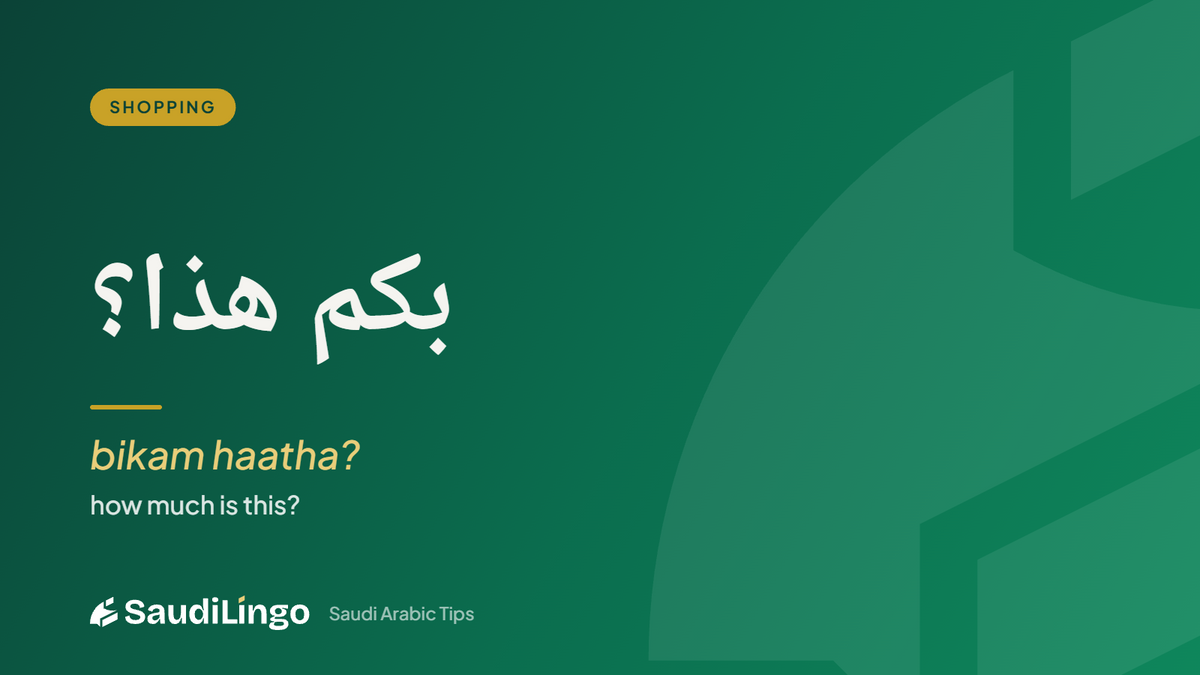
To shop in Saudi Arabic you need three things: the numbers, the currency (riyals and halalas) and one question, bikam? (how much?). Bargaining is normal in traditional souqs but not in malls, supermarkets or chain stores. This guide covers numbers from 1 into the thousands, asking the price, making a counter-offer and walking away politely.
Arabic script, easy pronunciation and plain English — sent to your inbox in about a minute.
Nowhere does Saudi Arabic get more practical than at a checkout counter. Whether you're haggling over an abaya in Jeddah's Souq Al-Alawi, buying dates in Al-Ahsa, or just grabbing a bottle of water from the corner bagaala, two skills will carry you further than almost anything else: knowing your numbers, and knowing how to talk about price.
The good news is that this is beginner-friendly territory. You don't need perfect grammar to shop well — you need about thirty words and the confidence to say them. Everything below is in the spoken Saudi dialect that people actually use in shops, not Modern Standard Arabic (MSA). If you've read our guide on Saudi Arabic vs MSA, you already know why that distinction matters: MSA numbers and phrases will be understood, but they'll mark you instantly as someone who learned from a textbook. Every phrase here is written in Arabic script, with a simple transliteration and the English meaning.
Why Numbers Are the Fastest Win for a Beginner
Numbers show up everywhere in daily life — prices, phone numbers, addresses, taxi fares, dates, times, and quantities. Unlike vocabulary you might use once a week, you'll hear numbers dozens of times a day. That means they stick fast.
They also protect you. If you can't understand a spoken price, you're at the mercy of whatever gets typed into a calculator and turned toward you — and in tourist-heavy areas, that number is sometimes optimistic. Understanding khamseen riyaal when you hear it changes the whole dynamic.
Saudi Arabic Numbers 1 to 10
Start here. These ten are the foundation for everything else.
- واحد — waaHid — one
- اثنين — ithneen (often shortened to thneen) — two
- ثلاثة — thalaatha — three
- أربعة — arba3a — four
- خمسة — khamsa — five
- ستة — sitta — six
- سبعة — sab3a — seven
- ثمانية — thamaanya — eight
- تسعة — tis3a — nine
- عشرة — 3ashara — ten
A practical tip: Saudis will often just hold up fingers alongside the number. Watch the hands as well as the mouth — it's free confirmation while your ear catches up.
Numbers 11 to 20
The teens follow a pattern — the number plus a -ta3ash ending. In everyday Saudi speech these get compressed and spoken quickly, so don't worry about pronouncing every syllable perfectly.
- احدعش — iHda3ash — eleven
- اثنعش — ithna3ash — twelve
- ثلثعش — thalatta3ash — thirteen
- أربعتعش — arba3ta3ash — fourteen
- خمستعش — khamasta3ash — fifteen
- ستعش — sitta3ash — sixteen
- سبعتعش — saba3ta3ash — seventeen
- ثمنتعش — thamanta3ash — eighteen
- تسعتعش — tis3ata3ash — nineteen
- عشرين — 3ishreen — twenty
Tens, Hundreds and Thousands
Once you have the tens, you can build almost any price you'll encounter.
- عشرين — 3ishreen — twenty
- ثلاثين — thalaatheen — thirty
- أربعين — arba3een — forty
- خمسين — khamseen — fifty
- ستين — sitteen — sixty
- سبعين — sab3een — seventy
- ثمانين — thamaaneen — eighty
- تسعين — tis3een — ninety
- مية — miya — one hundred
- ميتين — miyateen — two hundred
- ألف — alf — one thousand
Building Compound Numbers
Saudi Arabic puts the smaller number first, joined with w ("and"):
- خمسة وعشرين — khamsa w 3ishreen — twenty-five (literally "five and twenty")
- ثلاثة وخمسين — thalaatha w khamseen — fifty-three
- مية وخمسين — miya w khamseen — one hundred fifty
- ألفين — alfeen — two thousand
If that "five and twenty" order sounds odd, it's the same logic as German or old-fashioned English ("four and twenty blackbirds"). After a week of hearing prices, it stops feeling backwards.
Talking About Money: Riyals and Halalas
Saudi Arabia's currency is the riyal, divided into 100 halalas — though in practice you'll rarely deal with halalas outside of supermarket receipts.
- ريال — riyaal — riyal
- ريالات — riyaalaat — riyals (plural, used with 3–10)
- هللة — halala — halala
- فلوس — floos — money
- كاش — kaash — cash
- شبكة — shabaka — card payment (literally "network" — this is what you say when you want to pay by card)
That last one is genuinely useful. If a cashier asks kaash walla shabaka? (كاش ولا شبكة؟), they're asking "cash or card?"
Asking the Price
Four phrases cover practically every situation:
- بكم؟ — bikam? — How much?
- بكم هذا؟ — bikam haatha? — How much is this?
- كم سعره؟ — kam si3rah? — What's its price?
- الحساب كم؟ — al-Hisaab kam? — How much is the bill? (restaurants, taxis)
Bikam? on its own, said while pointing, is perfectly natural and will get you through most transactions. Don't overthink it.
The Art of Bargaining
Bargaining in Saudi Arabia is friendly, not adversarial. It's closer to a light social exchange than a negotiation — smiles, a bit of theatre, and a deal that leaves both sides pleased. Approach it with good humor and you'll almost always do well.
Opening Moves
- غالي شوي — ghaali shway — A bit expensive
- والله غالي — wallah ghaali — Honestly, that's expensive
- ما فيه تخفيض؟ — ma feeh takhfeeTH? — Is there no discount?
- سوّ لي سعر زين — sawwi li si3r zeen — Give me a good price
Ghaali shway delivered with a smile is the classic opener. It's soft, it's polite, and it signals that you know the game.
Making a Counter-Offer
- خلّه بمية — khallah bi-miya — Make it 100
- أعطيك خمسين — a3Teek khamseen — I'll give you fifty
- آخر كلام؟ — aakhir kalaam? — Final word? (i.e. best price?)
- أقل شي كم؟ — agal shay kam? — What's the lowest?
Aakhir kalaam? is the phrase that signals you're serious and ready to close. Use it once you're near the number you want.
Closing — or Walking Away
- طيب خلاص، أخذته — Tayyib khalaaS, akhathtah — Okay, done, I'll take it
- تمام، اتفقنا — tamaam, ittafagna — Great, we have a deal
- بروح أشوف غيره — barooH ashoof gheerah — I'll go look elsewhere
- الله يعطيك العافية — allah ya3Teek al-3aafya — Thanks / well done (a warm way to end, deal or no deal)
The gentle walk-away is the most powerful tool in any souq. Say barooH ashoof gheerah, turn slowly, and there's a decent chance you'll hear a better number before you reach the door. And if you don't — no hard feelings on either side. Leaving with allah ya3Teek al-3aafya keeps things friendly.
Where You Can (and Can't) Bargain
This trips up a lot of visitors. Bargaining is expected in some places and out of place in others.
Bargain freely: traditional souqs, gold and perfume shops, carpet and antique dealers, small independent electronics stores, furniture shops, and most street or market stalls.
Don't bargain: supermarkets, malls and chain stores, pharmacies, restaurants and cafés, and anywhere with clearly printed and scanned price tags. Asking for a discount at a coffee-chain counter will just create a confused pause.
Somewhere in between: taxi fares (agree before you get in, if not using an app), tailors, and small service providers. A polite ma feeh takhfeeTH? costs nothing.
Essential Shopping Vocabulary
- سوق — soog — market
- بقالة — bagaala — corner shop
- عندك...؟ — 3indak...? — Do you have...?
- أبغى — abgha — I want
- أشوف بس — ashoof bas — Just looking
- مقاس — magaas — size
- لون — loon — color
- كيس — kees — bag
- فاتورة — faatoora — receipt / invoice
- أقدر أجربه؟ — agdar ajarrbah? — Can I try it on?
- فيه أرخص؟ — feeh arkhaS? — Is there anything cheaper?
Quick Reference: Your Shopping Cheat Sheet
| Arabic | Transliteration | Meaning |
|---|---|---|
| بكم هذا؟ | bikam haatha? | How much is this? |
| غالي شوي | ghaali shway | A bit expensive |
| ما فيه تخفيض؟ | ma feeh takhfeeTH? | Any discount? |
| آخر كلام؟ | aakhir kalaam? | Best price? |
| خلّه بمية | khallah bi-miya | Make it 100 |
| فيه أرخص؟ | feeh arkhaS? | Anything cheaper? |
| أخذته | akhathtah | I'll take it |
| كاش ولا شبكة؟ | kaash walla shabaka? | Cash or card? |
| عندك مقاس أكبر؟ | 3indak magaas akbar? | Do you have a bigger size? |
| أشوف بس | ashoof bas | Just looking |
Common Mistakes to Avoid
- Using MSA number forms. Textbook Arabic has complex agreement rules for numbers. Spoken Saudi Arabic is far more forgiving — khamsa riyaal will never confuse anyone.
- Bargaining too aggressively. Offering a quarter of the asking price is a strategy from other markets, not this one. Saudi bargaining is gentler; expect to move perhaps 10–30% on most items.
- Bargaining where you shouldn't. Trying it in a chain store is awkward for everyone. Look for printed, scanned price tags — those are fixed.
- Not confirming the final number. Repeat the agreed price back before you pay: khamseen, SaH? (خمسين، صح؟ — "fifty, right?"). Cheap insurance.
- Skipping the greeting. Walking up and asking bikam? with no as-salaamu 3alaykum first is abrupt. See our guide on Saudi greetings — thirty seconds of warmth genuinely improves your price.
Put It Into Practice
The next time you're in a shop, set yourself one small challenge: ask bikam haatha? and try to understand the answer without looking at the calculator. That's it. Do that five times and the numbers will start to click.
Allah ya3Teek al-3aafya — and happy haggling!
Where to Go From Here
Prices and numbers are the fastest win in the dialect. Turning them into real conversation is the next step — here is the shortest route.
Start with 30 phrases — free
Our free PDF gives you 30 essential Saudi phrases, each in Arabic script, easy transliteration and plain English. Sent to your inbox in about a minute.
Then pick the format that fits how you learn.
- Reading and audio. Saudi Arabic for Beginners — Book 1 takes you from zero through 9 lessons with 25 native-speaker audio tracks. Book 1 + Book 2 together carry you all the way to real back-and-forth conversation.
- Watching and speaking. Speak Saudi Arabic — A1 is the full video course: 17 lessons, 48 real-world speaking challenges, and an A1 certificate at the end.
- Practising out loud with a teacher. Our private lessons are one-on-one with a native Saudi tutor.
Keep reading
- Ordering coffee and food — restaurant and café phrases you will use this week.
- 20 common Saudi Arabic phrases — the everyday lines to start with.
- How to greet people in Saudi Arabia — the right greeting for every situation.
- Family words in Saudi Arabic — what to call everyone at the gathering.
Native Saudi teachers and course designers helping English speakers talk to Saudis in their own dialect — since 2020. About us