Saudi Arabic for Iqama, Absher and Government Paperwork
The everyday Saudi Arabic for iqama renewal, Absher, appointments, fingerprints and fees — the phrases residents actually need at the counter.

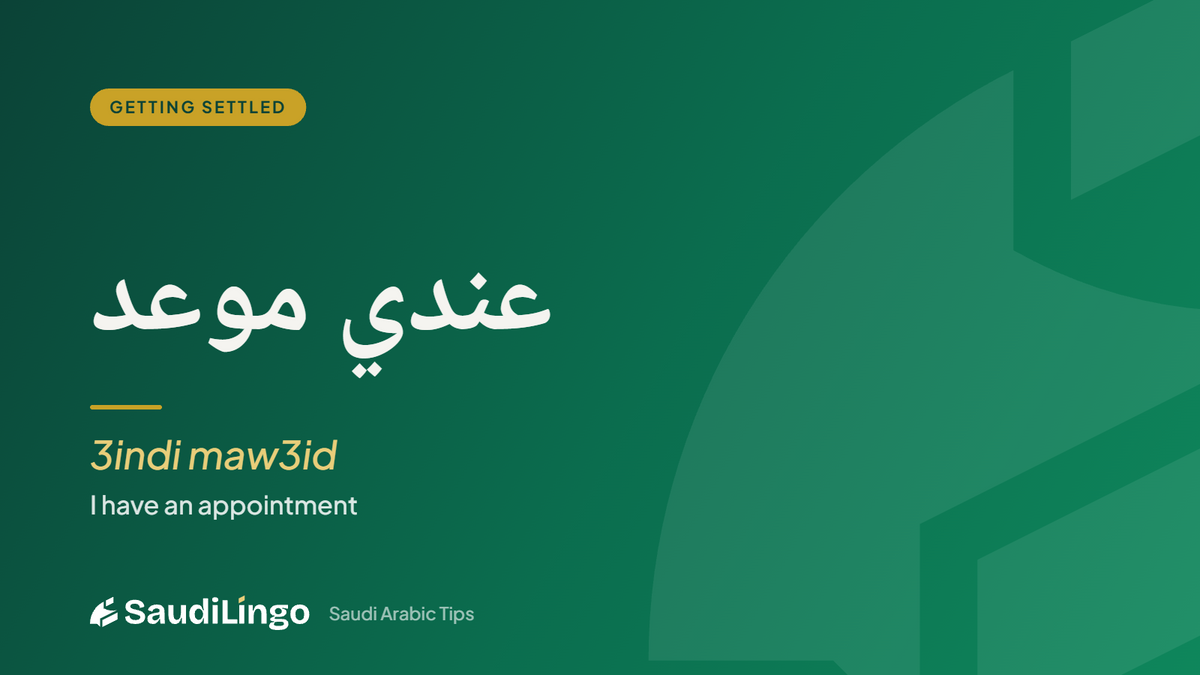
Iqama renewal in Saudi Arabic is تجديد الإقامة — tajdeed al-igaama. At the counter, say محتاج أجدد إقامتي — miHtaaj ajaddid igaamti — "I need to renew my iqama", and عندي موعد — 3indi maw3id — "I have an appointment". The single most useful question is وش ناقص؟ — wesh naagiS? — "what is missing?", because it turns a rejected application into a short list. Ask كم الرسوم؟ — kam ar-rusoom? — "how much are the fees?" and متى تخلص؟ — mata tikhlaS? — "when will it be done?" before you leave.
Arabic script, easy pronunciation and plain English — sent to your inbox in about a minute.
If you live in Saudi Arabia, the Arabic you actually need first is not tourist Arabic. It is the Arabic of the iqama counter, the Absher screen and the clerk who looks up and says one word you do not know. The word you need most often is إقامة — igaama — your residency permit, and the phrase that follows it almost every year is تجديد الإقامة — tajdeed al-igaama — iqama renewal.
This guide gives you the everyday Saudi Arabic for residency paperwork: renewing your iqama, booking and attending an appointment, the exit and re-entry visa, fees, fingerprints, and the handful of sentences that get you unstuck when a document is missing. Everything here is the spoken Saudi dialect you will really hear at a counter, not the formal Arabic printed on the form.
The words on every document you own
Start with the nouns. Once these six are automatic, most of what a clerk says to you becomes guessable from context.
- إقامة — igaama — residency permit
- رقم الإقامة — ragam al-igaama — iqama number
- الرقم الموحد — ar-ragam al-muwaHHad — your unified number
- جواز — jawaaz — passport
- كفيل — kafeel — sponsor
- صاحب العمل — SaaHib al-3amal — employer
Two adjectives decide almost every conversation about a document. A document is either صالحة — SaaliHa — valid, or منتهية — muntahiya — expired. If a clerk points at your papers and says muntahiya, that is the whole message: it has run out.
Saying what you came to do
Walk up, open with لو سمحت — law samaHt — excuse me, and then say your business in one sentence. These four cover most visits:
- محتاج أجدد إقامتي — miHtaaj ajaddid igaamti — I need to renew my iqama
- عندي موعد — 3indi maw3id — I have an appointment
- أبغى أحدّث بياناتي — abgha aHaddith bayaanaati — I want to update my details
- جيت أستلم الإقامة — jeet astalim al-igaama — I came to collect the iqama
Note abgha. It is the Saudi way of saying "I want", and you will use it far more than any textbook form. If you have met it before in our guide to 20 common Saudi Arabic phrases, this is the same word doing serious work.
Absher, Muqeem and doing it online
Most residency transactions now start on a screen rather than at a counter. أبشر — absher — is the government services platform where you handle your own transactions, and مقيم — mugeem — is the portal your employer uses for your file. Fees are usually paid through سداد — sadaad, the national bill payment system, using a number your bank app recognises.
The question worth memorising, because it saves whole mornings:
- أقدر أسويها أونلاين؟ — agdar asawweeha online? — can I do this online?
- لازم أجي بنفسي؟ — laazim aji binafsi? — do I have to come in person?
- الحساب مقفل — al-Hisaab mugfal — the account is locked
- ما وصلني الرمز — ma waSalni ar-ramz — I did not receive the code
That last one comes up constantly, because almost everything is confirmed by an SMS code sent to the number registered against your iqama. If your number has changed, the sentence you need is رقمي تغيّر — ragami taghayyar — my number has changed.
Appointments, queues and turns
An appointment is موعد — maw3id. Booking one is حجز موعد — Hajz maw3id. Once you are inside the building, two more words run the room: الطابور — aT-Taaboor — the queue, and الدور — ad-door — the turn.
- متى دوري؟ — mata doori? — when is my turn?
- هذا دورك — haatha doorak — this is your turn
- انتظر هنا — intaTHir hina — wait here
- خذ رقم — khuth ragam — take a number
- النافذة رقم ثلاثة — an-naafitha ragam thalaatha — window number three
And the one sentence you will hear more than you would like: تعال بكرة — ta3aal bukra — come tomorrow.
Fingerprints, photos and the biometrics visit
A fingerprint is بصمة — baSma, and the plural you will see on signs is بصمات — baSamaat. If you are sent for biometrics, expect short instructions rather than sentences:
- حط إصبعك هنا — HuTT iSba3ak hina — put your finger here
- اليد اليمين — al-yad al-yameen — the right hand
- اليد اليسار — al-yad al-yasaar — the left hand
- ناظر الكاميرا — naTHeral-kamera — look at the camera
- لا تتحرك — la titHarrak — do not move
When a document is missing
This is where most visits go wrong, and where a single phrase changes the outcome. Papers are الأوراق — al-awraag, and a copy is صورة — Soora.
- ناقص ورقة — naagiS waraga — a document is missing
- وش ناقص؟ — wesh naagiS? — what is missing?
- أبغى صورة من الإقامة — abgha Soora min al-igaama — I need a copy of the iqama
- وين أصوّر؟ — ween aSawwir? — where can I photocopy?
- هذا يكفي؟ — haatha yikfi? — is this enough?
Ask wesh naagiS? before you leave the counter. Asking it turns a wasted trip into a short list, and the clerk will usually write it down for you if you ask with law samaHt.
Fees, timing and getting it back
Fees are الرسوم — ar-rusoom. Two questions cover the money and the wait:
- كم الرسوم؟ — kam ar-rusoom? — how much are the fees?
- سددت الرسوم — saddadt ar-rusoom — I have paid the fees
- كم تاخذ؟ — kam taakhith? — how long does it take?
- متى تخلص؟ — mata tikhlaS? — when will it be done?
- جاهزة — jaahza — it is ready
Numbers are doing quiet work in all of these. If yours are shaky, our guide to Saudi Arabic numbers is the fastest fix.
Exit and re-entry, and the other offices
Travel out of the country while you hold an iqama needs تأشيرة خروج وعودة — tasheerat khurooj wa 3awda — an exit and re-entry visa. Leaving for good is خروج نهائي — khurooj nihaayi — final exit. The office that handles residency and passports is الجوازات — al-jawaazaat, and traffic matters sit with المرور — al-muroor.
- وين مكتب الجوازات؟ — ween maktab al-jawaazaat? — where is the passports office?
- أبغى خروج وعودة — abgha khurooj wa 3awda — I want an exit and re-entry visa
- رخصة القيادة منتهية — rukhSat al-giyaada muntahiya — the driving licence has expired
- لازم أروح المرور؟ — laazim arooH al-muroor? — do I have to go to the traffic department?
Getting to the right building is its own small battle. Our guide to taxis and directions in Saudi Arabic has the phrases for the ride there.
Quick reference table
| Arabic | Transliteration | Meaning |
|---|---|---|
| محتاج أجدد إقامتي | miHtaaj ajaddid igaamti | I need to renew my iqama |
| عندي موعد | 3indi maw3id | I have an appointment |
| وش ناقص؟ | wesh naagiS? | What is missing? |
| أقدر أسويها أونلاين؟ | agdar asawweeha online? | Can I do this online? |
| كم الرسوم؟ | kam ar-rusoom? | How much are the fees? |
| متى تخلص؟ | mata tikhlaS? | When will it be done? |
| متى دوري؟ | mata doori? | When is my turn? |
| الإقامة منتهية | al-igaama muntahiya | The iqama has expired |
| أبغى صورة من الإقامة | abgha Soora min al-igaama | I need a copy of the iqama |
| تأشيرة خروج وعودة | tasheerat khurooj wa 3awda | Exit and re-entry visa |
| ما وصلني الرمز | ma waSalni ar-ramz | I did not receive the code |
| يعطيك العافية | ya3Teek al-3aafya | Thank you for your effort |
End every counter visit with that last one. ya3Teek al-3aafya is what Saudis say to someone who has just done work for them, and the reply you will get is الله يعافيك — allah y3aafeek.
Quick answers
How do you say iqama renewal in Saudi Arabic?
تجديد الإقامة — tajdeed al-igaama. To say you need one, use محتاج أجدد إقامتي — miHtaaj ajaddid igaamti — I need to renew my iqama.
What is the most useful phrase at a Saudi government office?
وش ناقص؟ — wesh naagiS? — what is missing? It turns a rejected application into a short list of what to bring next time, and it works at every counter.
Do I need Arabic to use Absher?
Absher offers an English interface, so you can complete most transactions without Arabic. You will still need spoken Saudi Arabic for the in-person steps — appointments, fingerprints and collection — which is exactly what the phrases above cover.
Where to take this next
Paperwork Arabic is a small, closed vocabulary. You can hold it after a week. The part that does not come from a page is the sound: knowing that igaama, not "iqaama", is what a clerk actually says, and hearing wesh naagiS? fast enough to answer it. Our Speak Saudi Arabic A1 course takes you through the sounds and the sentence patterns behind every phrase on this page, in real Saudi voices at real Saudi speed.
If you would rather read first, our Saudi Arabic books cover the same everyday dialect in print, and the free starter pack gives you a set of phrases to carry on your phone. When you want a Saudi teacher to correct you out loud, our one-to-one lessons are there — our teachers have given over 4,000 hours of lessons since 2020.
Native Saudi teachers and course designers helping English speakers talk to Saudis in their own dialect — since 2020. About us