How to Greet People in Saudi Arabia: Greetings for Every Situation
Learn how Saudis really greet each other — from as-salamu alaykum to hala wallah — with Arabic script, easy pronunciation, and the etiquette behind every situation.

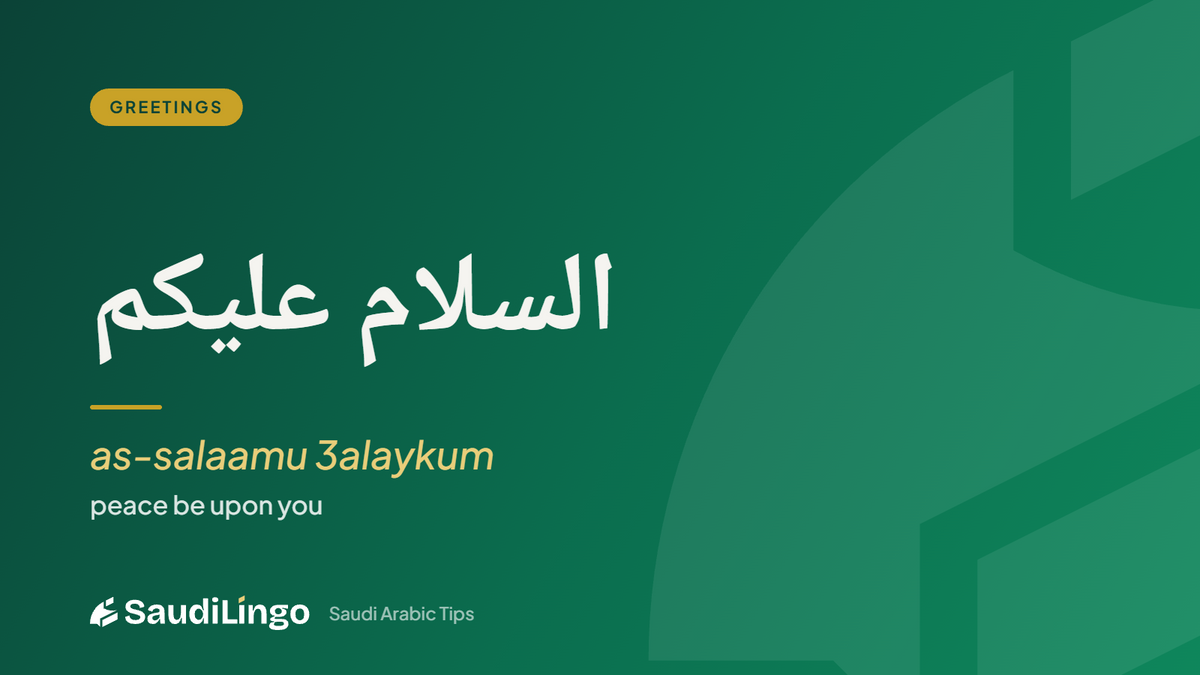
The safest way to say hello in Saudi Arabia is as-salaamu 3alaykum (peace be upon you); the reply is wa 3alaykum as-salaam. Among friends, Saudis say hala or hala wallah (hi, welcome), then ask keef Haalak? to a man or keef Haalek? to a woman (how are you?). The usual answer is bkheer alHamdulillah (I'm well, thank God). In the morning say SabaaH al-kheer; the reply is SabaaH an-noor.
Arabic script, easy pronunciation and plain English — sent to your inbox in about a minute.
Walk into any majlis, office, or corner bagaala in Saudi Arabia and you'll notice something right away: greetings are not a quick formality. They're warm, they're layered, and they often go back and forth three or four times before anyone gets to the point. Knowing how to greet people properly is probably the single highest-impact skill you can learn as a beginner — it opens doors, earns smiles, and instantly signals respect.
In this guide, you'll learn the greetings Saudis actually use in everyday life — in the spoken Saudi dialect, not Modern Standard Arabic (MSA). If you've read our article on Saudi Arabic vs MSA, you'll know the difference matters: textbook greetings can sound stiff or overly formal in real conversation. Every phrase below is written in Arabic script, with an easy transliteration and the English meaning, so you can start using them today.
Watch the full video
Why Greetings Matter So Much in Saudi Culture
In Saudi Arabia, a greeting is a small ritual of respect. Skipping it — or rushing it — can come across as cold, even rude. Whether you're entering a room, joining a gathering, or messaging someone on WhatsApp, you're expected to open with a proper greeting and usually a few follow-up questions about how the other person is doing.
The good news? Saudis are famously generous with learners. Even a simple, slightly mispronounced greeting in their dialect will usually be met with delight, encouragement, and often an invitation to coffee. A little effort goes a very long way.
The Universal Greeting: As-salaamu 3alaykum
If you learn only one greeting, make it this one:
- السلام عليكم — as-salaamu 3alaikum — "Peace be upon you"
- وعليكم السلام — wa 3alaikum as-salaam — "And peace be upon you" (the reply)
This greeting works everywhere, with everyone, at any time of day — entering a shop, joining a meeting, walking into a majlis, or answering the phone. It's polite, universal, and always appropriate. If someone says it to you, replying is expected, so memorize the response just as well as the greeting itself.
Everyday Casual Greetings Saudis Actually Use
Once the salam is out of the way, everyday Saudi conversation shifts into friendly, fast-moving territory. These are the phrases you'll hear constantly among friends, coworkers, and even shopkeepers.
Hala! The All-Purpose Welcome
- هلا — halaa — "Hi / welcome"
- هلا والله — halaa wallah — "Hey, welcome!" (extra warm)
- يا هلا ومرحبا — ya halaa w-marHaba — "Oh hello and welcome!"
halaa is the sound of Saudi friendliness. You'll hear halaa wallah the moment you walk into a friend's house, and it's also the standard warm reply when someone greets you first. The more enthusiasm you put into it, the more Saudi it sounds.
Asking "How Are You?"
- كيف حالك؟ — kaif Haalak? — "How are you?" (to a man)
- كيف حالك؟ — kaif Haalek? — "How are you?" (to a woman)
- وش أخبارك؟ — wesh akhbaarak? — "What's your news?" / "What's up?"
- عساك طيب؟ — 3asaak Tayyib? — "Hope you're well?"
Notice the ending changes depending on who you're talking to: -ak for men, -ek for women. This little detail instantly makes your Saudi Arabic sound more natural.
The Standard Replies
- بخير الحمدلله — bkheer al-Hamdulillah — "I'm well, praise be to God"
- طيب الحمدلله — Tayyib al-Hamdulillah — "Good, thank God"
- تمام — tamaam — "All good"
In real conversations, these questions and answers loop several times — kaif Haalak? al-Hamdulillah, wesh akhbaarak? tamaam, w-enta kaif Haalak? Don't be surprised; it's part of the rhythm. Just keep answering warmly and return the questions.
Time-of-Day Greetings
Like English, Saudi Arabic has morning and evening greetings — with some uniquely Saudi twists:
- صباح الخير — SabaaH al-khair — "Good morning"
- صباح النور — SabaaH an-noor — "Morning of light" (the reply)
- مساء الخير — masaa al-khair — "Good evening"
- مساء النور — masaa an-noor — "Evening of light" (the reply)
Saudis love playful variations, especially in texts and among friends — you might hear SabaaH al-ward ("morning of roses") or SabaaH al-full ("morning of jasmine"). A cheerful reply along the same lines always lands well.
Formal and Respectful Greetings
Greeting Elders
Respect for elders is central to Saudi culture, and it shows in greetings. When greeting an older person:
- Always begin with the full السلام عليكم — as-salaamu 3alaikum — never just a quick "halaa."
- Stand up if you're seated. In gatherings, younger people greet elders first.
- Add a term of respect: يا عم — ya 3amm — "uncle" or يا خالة — ya khaala — "auntie" for older people you know well.
Business and Professional Settings
- أهلاً وسهلاً — ahlan wa sahlan — "Welcome" (formal welcome)
- تشرفنا — tsharrafna — "We're honored" (when meeting someone for the first time)
- كيف الحال إن شاء الله طيبين؟ — kaif al-Haal in shaa Allah Tayyibeen? — "How are you, well I hope?"
tsharrafna is your go-to phrase in first meetings — the equivalent of "pleased to meet you," and it works in both business and social settings.
Greeting Etiquette: What Your Body Says
Words are only half the greeting in Saudi Arabia. Here's the unspoken part:
Handshakes and Beyond
- Handshake: Standard between men, often softer and longer than a Western handshake, sometimes held while the greeting questions continue.
- Cheek kisses: Between friends and relatives of the same gender — usually on the right cheek, sometimes multiple times depending on the region.
- The nose kiss: In some regions, especially among Bedouin families and in the central and northern areas, men greet respected elders with a light touch of the nose — a deeply traditional sign of respect.
- Hand on heart: Placing your right hand over your chest after a handshake (or instead of one) adds sincerity — and is the polite option when greeting someone of the opposite gender, where a handshake may not be appropriate unless they extend their hand first.
Greeting a Group
Entering a majlis or gathering? Greet the whole room with a clear as-salaamu 3alaikum, then greet individuals starting from the right side of the room — or begin with the eldest or most senior person present. Everyone will typically stand to greet a newcomer. For more on majlis manners, our live lessons cover cultural etiquette alongside the language itself.
Saying Goodbye Like a Saudi
Goodbyes get their own set of warm phrases:
- مع السلامة — ma3a as-salaama — "Goodbye" (literally "with safety")
- الله يحفظك — Allah yiHfaTHak — "May God protect you"
- نشوفك على خير — nshoofak 3ala khair — "See you well" / "See you soon"
- في أمان الله — fi amaan Allah — "In God's protection"
A guest leaving a Saudi home will often be walked to the door — or the car — with a chain of these phrases and invitations to return. It's one of the most endearing parts of Saudi hospitality.
Common Mistakes to Avoid
- Rushing the greeting. Jumping straight to business without asking how someone is doing feels abrupt. Give the greeting exchange its time.
- Using MSA textbook phrases. Saying kayfa Haaluka? in perfect MSA will be understood, but it sounds like a news broadcast. The Saudi kaif Haalak? is what people actually say.
- Forgetting the reply. If someone greets you with as-salaamu 3alaikum, answering with silence or just "hi" is awkward. Learn the responses as firmly as the greetings.
- Wrong gender endings. Saying kaif Haalak to a woman (instead of kaif Haalek) is a small but noticeable slip — an easy fix that makes a big difference.
Quick Reference: Your First 10 Saudi Greetings
| Arabic | Transliteration | Meaning |
|---|---|---|
| السلام عليكم | as-salaamu 3alaykum | Peace be upon you |
| وعليكم السلام | wa 3alaykum as-salaam | And upon you peace (reply) |
| هلا والله | hala wallah | Hey, welcome! |
| كيف حالك؟ | keef Haalak/Haalek? | How are you? (m/f) |
| وش أخبارك؟ | wesh akhbaarak? | What's up? |
| بخير الحمدلله | bkheer alHamdulillah | I'm well, thank God |
| صباح الخير | SabaaH al-kheer | Good morning |
| مساء الخير | masaa al-kheer | Good evening |
| تشرفنا | tsharrafna | Pleased to meet you |
| مع السلامة | ma3a as-salaama | Goodbye |
ma3a as-salaama — and happy learning!
More Videos on This Topic
One more video on greeting people the Saudi way.
Where to Go From Here
Greetings open the door. Holding the conversation that follows is the next step — here is the shortest route to it.
Start with 30 phrases — free
Our free PDF gives you 30 essential Saudi phrases, each in Arabic script, easy transliteration and plain English. Sent to your inbox in about a minute.
Then pick the format that fits how you learn.
- Reading and audio. Saudi Arabic for Beginners — Book 1 takes you from zero through 9 lessons with 25 native-speaker audio tracks. Book 1 + Book 2 together carry you all the way to real back-and-forth conversation.
- Watching and speaking. Speak Saudi Arabic — A1 is the full video course: 17 lessons, 48 real-world speaking challenges, and an A1 certificate at the end.
- Practising out loud with a teacher. Our private lessons are one-on-one with a native Saudi tutor.
Keep reading
- 20 common Saudi Arabic phrases — the everyday lines to start with.
- Family words in Saudi Arabic — what to call everyone at the gathering.
- Ordering coffee and food — restaurant and café phrases you will use this week.
- Saudi Arabic vs Modern Standard Arabic — what to learn, and what you can safely skip.
- Saudi Arabic for taxis and directions — getting around Riyadh and Jeddah by car and on foot.
Native Saudi teachers and course designers helping English speakers talk to Saudis in their own dialect — since 2020. About us