Saudi Arabic for the Doctor and the Clinic: Phrases for Your Visit
The Saudi dialect phrases that carry a clinic visit — booking in at reception, saying what hurts, understanding the doctor, and the pharmacy window.

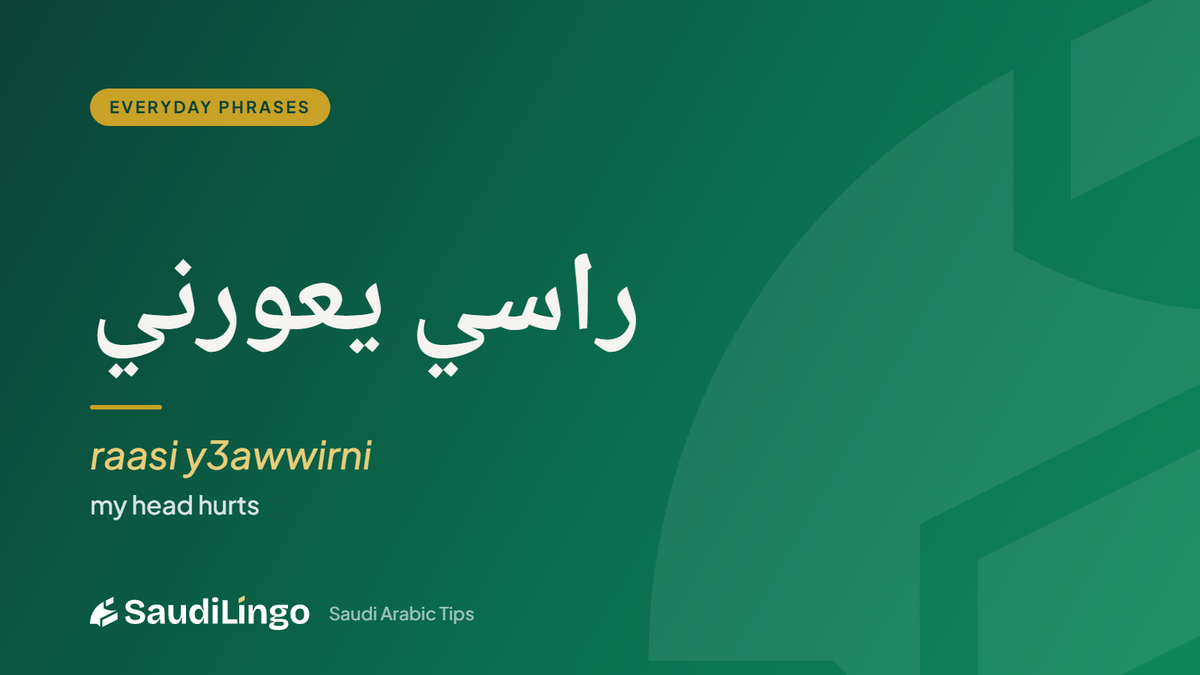
Three Saudi Arabic phrases carry most clinic visits: 3indi maw3id (I have an appointment), [body part] y3awwirni, as in raasi y3awwirni (my head hurts), and min thalaatha ayyaam (for three days). Add 3indi Haraara (I have a fever), ma fahamt (I didn't understand) and, at the pharmacy, keef aakhthuh? (how do I take it?). For emergencies in Saudi Arabia call the Red Crescent on 997.
Arabic script, easy pronunciation and plain English — sent to your inbox in about a minute.
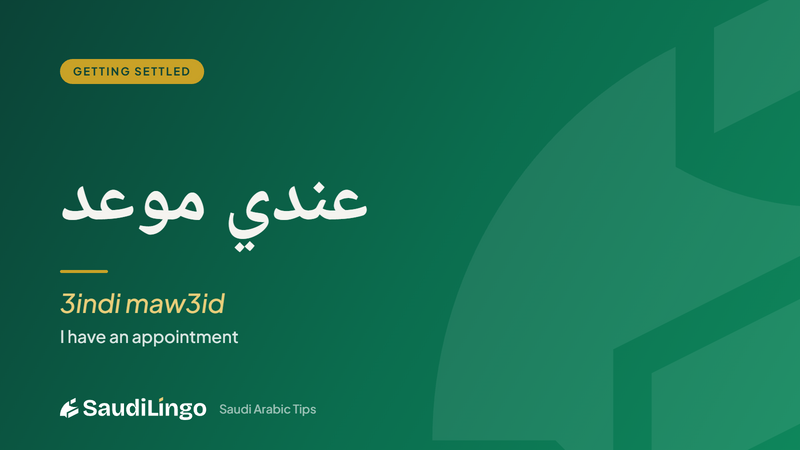
If you are living in Saudi Arabia and you have a clinic appointment coming up, the three phrases that carry most of the visit are عندي موعد — 3indi maw3id — "I have an appointment", راسي يعورني — raasi y3awwirni — "my head hurts" (swap in any body part), and من ثلاثة أيام — min thalaatha ayyaam — "for three days". Reception, the doctor's first question, and the follow-up question are all covered by those three.
Most clinics and hospitals in the Kingdom have English-speaking staff somewhere in the building, but "somewhere" is the problem. The receptionist, the nurse taking your weight, the pharmacist at the window — those are the people you actually have to get past, and they are far more likely to speak Saudi dialect than textbook Arabic. This guide gives you the everyday Saudi phrases for the whole visit, in the order you will need them. It is help with wording, not medical advice — for a real emergency call the Red Crescent on 997, or 911 where the unified emergency number is in service.
Arriving: reception and the front desk
Start here. Reception is where a visit is most likely to stall, because it is administrative rather than medical, and the staff run through the same script all day.
- لو سمحت، وين الاستقبال؟ — law samaHt, ween al-istigbaal? — "Excuse me, where is reception?"
- عندي موعد الساعة ثلاثة — 3indi maw3id as-saa3a thalaatha — "I have an appointment at three o'clock."
- ما عندي موعد — ma 3indi maw3id — "I don't have an appointment."
- أبغى أشوف دكتور — abgha ashoof doktoor — "I want to see a doctor."
- هذي الإقامة — haathi al-igaama — "Here is my iqama."
- هذي بطاقة التأمين — haathi biTaagat at-tameen — "Here is my insurance card."
Note abgha — it is the Saudi way of saying "I want", and it is one of the highest-value words in the whole dialect. You will use it at the clinic, in a shop, and in a taxi on the way home.
The waiting question
Nobody escapes this one:
- كم لازم أنتظر؟ — kam laazim antaTHir? — "How long do I have to wait?"
- الدور على مين؟ — ad-door 3ala meen? — "Whose turn is it?"
- دوري متى؟ — doori mata? — "When is my turn?"
Saying what is wrong: one pattern does most of the work
You do not need a medical vocabulary. You need one sentence pattern and a handful of body parts. The pattern is simply [body part] يعورني — [body part] y3awwirni — "[body part] hurts me."
- راسي يعورني — raasi y3awwirni — "My head hurts."
- بطني يعورني — baTni y3awwirni — "My stomach hurts."
- ظهري يعورني — THahri y3awwirni — "My back hurts."
- اسناني تعورني — asnaani t3awwirni — "My teeth hurt."
- حلقي يعورني — Halgi y3awwirni — "My throat hurts."
The other half of the pattern is عندي — 3indi — "I have", which carries every symptom that is not a pain:
- عندي حرارة — 3indi Haraara — "I have a fever."
- عندي كحة — 3indi kaHHa — "I have a cough."
- عندي زكام — 3indi zukaam — "I have a cold."
- عندي دوخة — 3indi dookha — "I feel dizzy."
- عندي حساسية — 3indi Hasaasiyya — "I have an allergy."
Body parts worth knowing before you go
- راس — raas — head
- بطن — baTn — stomach
- ظهر — THahr — back
- صدر — Sadr — chest
- يد — yad — hand / arm
- رجل — rijl — leg / foot
- عين — 3een — eye
- أذن — uthun — ear
- اسنان — asnaan — teeth
The two questions the doctor will ask you
Almost every consultation opens the same way. Learn the answers and the visit stops feeling like an interrogation.
"Since when?"
The question is من متى؟ — min mata? — "Since when?" Answer with min plus a length of time:
- من أمس — min ams — "Since yesterday."
- من ثلاثة أيام — min thalaatha ayyaam — "For three days."
- من أسبوع — min usboo3 — "For a week."
- من شهر — min shahr — "For a month."
If numbers are still shaky, our guide to Saudi Arabic numbers covers one to a hundred in the forms people actually say.
"How bad is it?"
The question is usually الألم شديد؟ — al-alam shadeed? — "Is the pain severe?" Your options:
- شوي — shway — "A little."
- كثير — katheer — "A lot."
- ما أقدر أنام — ma agdar anaam — "I can't sleep."
- يروح ويرجع — yrooH w yirja3 — "It comes and goes."
- أحسن من أمس — aHsan min ams — "Better than yesterday."
Understanding what you are told
This is the half that most phrase lists skip, and it is the half that matters. You can get your symptoms across with gestures; understanding the instructions is harder. Listen for these:
- لازم تحاليل — laazim taHaaleel — "You need blood tests."
- لازم أشعة — laazim ashi33a — "You need an X-ray / scan."
- بكتب لك وصفة — baktib lak waSfa — "I'll write you a prescription."
- ارجع بعد أسبوع — irja3 ba3d usboo3 — "Come back in a week."
- ما فيه شي — ma feeh shay — "There's nothing wrong."
- اشرب موية كثير — ishrab moyaa katheer — "Drink plenty of water."
And the sentences that save you every time you lose the thread:
- مرة ثانية، لو سمحت — marra thaanya, law samaHt — "One more time, please."
- شوي شوي — shway shway — "Slowly, slowly."
- ما فهمت — ma fahamt — "I didn't understand."
At the pharmacy
The pharmacy window is its own small conversation, and Saudi pharmacies are everywhere, open late, and happy to advise on minor complaints.
- عندي وصفة — 3indi waSfa — "I have a prescription."
- أبغى شي للصداع — abgha shay liS-Sudaa3 — "I want something for a headache."
- كيف آخذه؟ — keef aakhthuh? — "How do I take it?"
- مرتين في اليوم — marrateen fil-yoom — "Twice a day."
- بعد الأكل — ba3d al-akl — "After food."
- قبل الأكل — gabl al-akl — "Before food."
- هذا بكم؟ — haatha bikam? — "How much is this?"
Paperwork, insurance and the words on the form
Clinic admin runs on a short list of nouns. Recognising them on a screen or a form is most of the battle.
- إقامة — igaama — residency permit
- تأمين — tameen — insurance
- ملف — malaf — (patient) file
- رقم الملف — ragm al-malaf — file number
- تقرير طبي — tagreer Tibbi — medical report
- إجازة مرضية — ijaaza maraTHiyya — sick leave
That last one matters at work as much as at the clinic. If you need to tell your manager, our piece on Saudi Arabic at work has the phrasing for it.
Getting there and getting home
Worth having ready before you set off, especially if you are unwell:
- ودني المستشفى — waddni al-mustashfa — "Take me to the hospital."
- أقرب عيادة وين؟ — agrab 3iyaada ween? — "Where is the nearest clinic?"
- وقّف هنا — waggif hina — "Stop here."
Our guide to taxis and directions in Saudi Arabic covers the rest of that ride.
The polite closing lines
Saudi clinics run on courtesy, and one phrase in dialect on the way out changes the temperature of the whole visit.
- يعطيك العافية — ya3Teek al-3aafya — literally "may He give you health"; the standard thank-you to anyone who has done work for you.
- الله يعافيك — allah y3aafeek — the reply to it, and also "get well" said to someone else.
- سلامتك — salaamtak — "I hope you recover", said to a patient. To a woman, salaamtek.
- ما تشوف شر — ma tshoof sharr — "May you see no harm" — the warm, very Saudi thing to say to someone who is ill.
If someone says salaamtak to you, the natural answer is الله يسلمك — allah ysallimak.
Quick reference
| Arabic | Transliteration | Meaning |
|---|---|---|
| عندي موعد | 3indi maw3id | I have an appointment |
| أبغى أشوف دكتور | abgha ashoof doktoor | I want to see a doctor |
| راسي يعورني | raasi y3awwirni | My head hurts |
| عندي حرارة | 3indi Haraara | I have a fever |
| من ثلاثة أيام | min thalaatha ayyaam | For three days |
| الألم شديد | al-alam shadeed | The pain is severe |
| ما أقدر أنام | ma agdar anaam | I can't sleep |
| كم لازم أنتظر؟ | kam laazim antaTHir? | How long do I have to wait? |
| عندي حساسية | 3indi Hasaasiyya | I have an allergy |
| كيف آخذه؟ | keef aakhthuh? | How do I take it? |
| بعد الأكل | ba3d al-akl | After food |
| يعطيك العافية | ya3Teek al-3aafya | Thank you (to someone who helped you) |
Quick answers
Do doctors in Saudi Arabia speak English?
Many do, particularly in private hospitals in Riyadh, Jeddah and the Eastern Province, where a large share of physicians are international hires. Reception staff, nurses and pharmacists are a different matter, and they are the people you deal with for most of the visit. A dozen dialect phrases close that gap.
How do I say "it hurts" in Saudi Arabic?
Use يعورني — y3awwirni — after the body part: raasi y3awwirni for "my head hurts", baTni y3awwirni for "my stomach hurts". The textbook verb is understood but sounds formal and nobody says it in conversation.
What should I bring to a clinic appointment in Saudi Arabia?
Your iqama (igaama) and your insurance card (biTaagat at-tameen) are asked for at reception almost every time. If you are returning to the same hospital, having your file number (ragm al-malaf) saved on your phone speeds things up considerably.
Where to go from here
A clinic visit is a good test of your Saudi Arabic because it is unforgiving: you cannot fall back on tourist phrases, and the answers matter. If the phrases above felt useful but you are not sure you could produce them out loud under pressure, that is the normal gap between reading a phrase and saying it — and it is a question of sound, not vocabulary.
Speak Saudi Arabic — A1 is our self-paced course for exactly that: every phrase spoken by a Saudi voice at Saudi speed, so the words come out recognisable the first time. Our books cover the written side phrase by phrase, and private lessons with our Saudi teachers let you rehearse a real conversation before you have to have it. If you would rather start with nothing at stake, grab our free guide to 30 everyday Saudi phrases first.
And if you want the everyday foundation underneath all of this, start with 20 common Saudi Arabic phrases every beginner should know.
Native Saudi teachers and course designers helping English speakers talk to Saudis in their own dialect — since 2020. About us